The Compliance Pentesting Matrix
A 2026 benchmark report on compliance-driven security gaps, pentesting requirements across frameworks, and how continuous validation reduces real-world breach risk.
%20(3).webp)









Why Compliance Security Fails in 2026
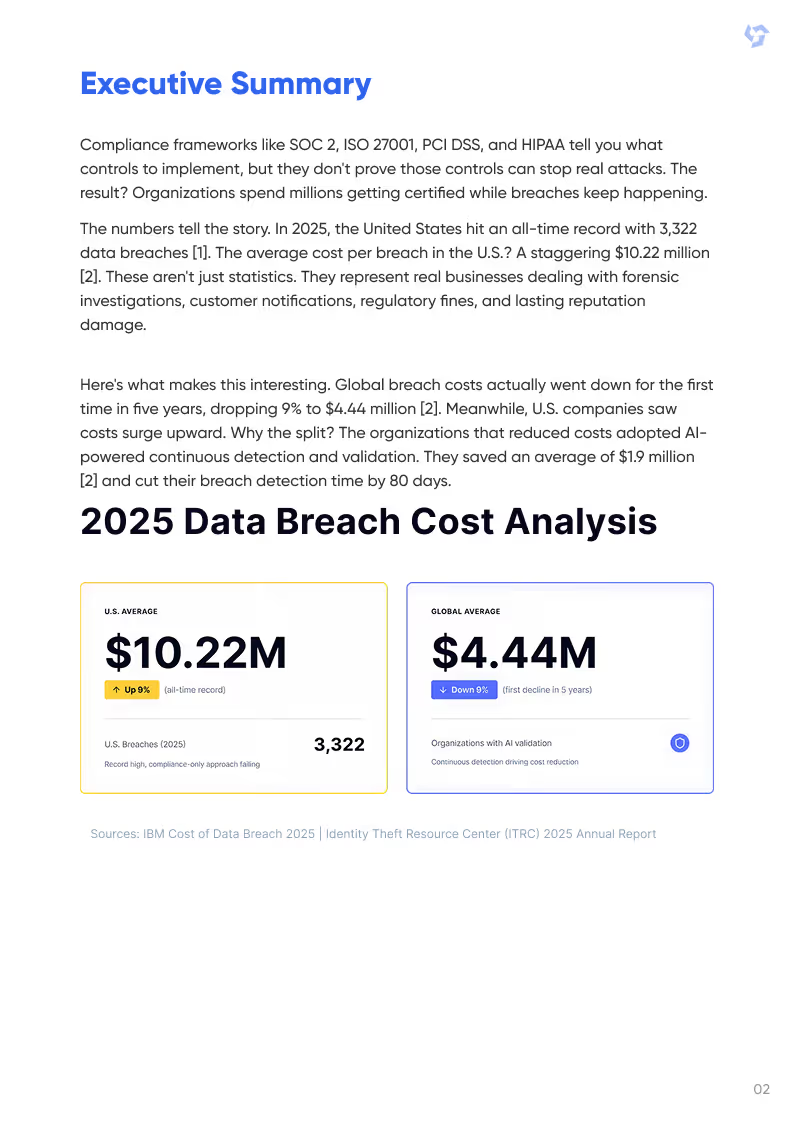
Despite widespread adoption of frameworks like SOC 2, ISO 27001, PCI DSS, and HIPAA, most organizations remain vulnerable to real-world attacks. Compliance validates control presence, not control effectiveness.
AppSecure research shows that point-in-time testing, incomplete scope coverage, and lack of adversarial validation create a persistent gap between audit readiness and actual security.
This report breaks down how compliance frameworks approach pentesting, where traditional programs fail, and how continuous validation closes the gap between certification and real-world resilience.
Key Insights Included in the Report
1. The Validation Gap: Compliance frameworks require controls, but do not prove they withstand real attacks. Organizations pass audits while exploitable attack paths remain active.
2. The Point-in-Time Problem: Annual pentesting creates 11 months of blind spots. Attackers operate in days, while validation cycles remain yearly.
3. The Third-Party Exposure: 30% of breaches now originate from third-party systems, yet most pentesting scopes exclude vendor and supply chain attack paths.
4. The AI & Shadow Risk Layer: Unsanctioned AI usage and lack of governance introduce new attack surfaces, with most organizations lacking visibility or testing coverage.
5. Continuous Validation Framework: A structured approach to move beyond periodic testing, continuously validate controls, reduce exploitability, and align security with real-world attacker behavior.
.webp)
Inside the Report
A practical, data-driven roadmap to strengthen security and drive measurable outcomes.
.webp)